
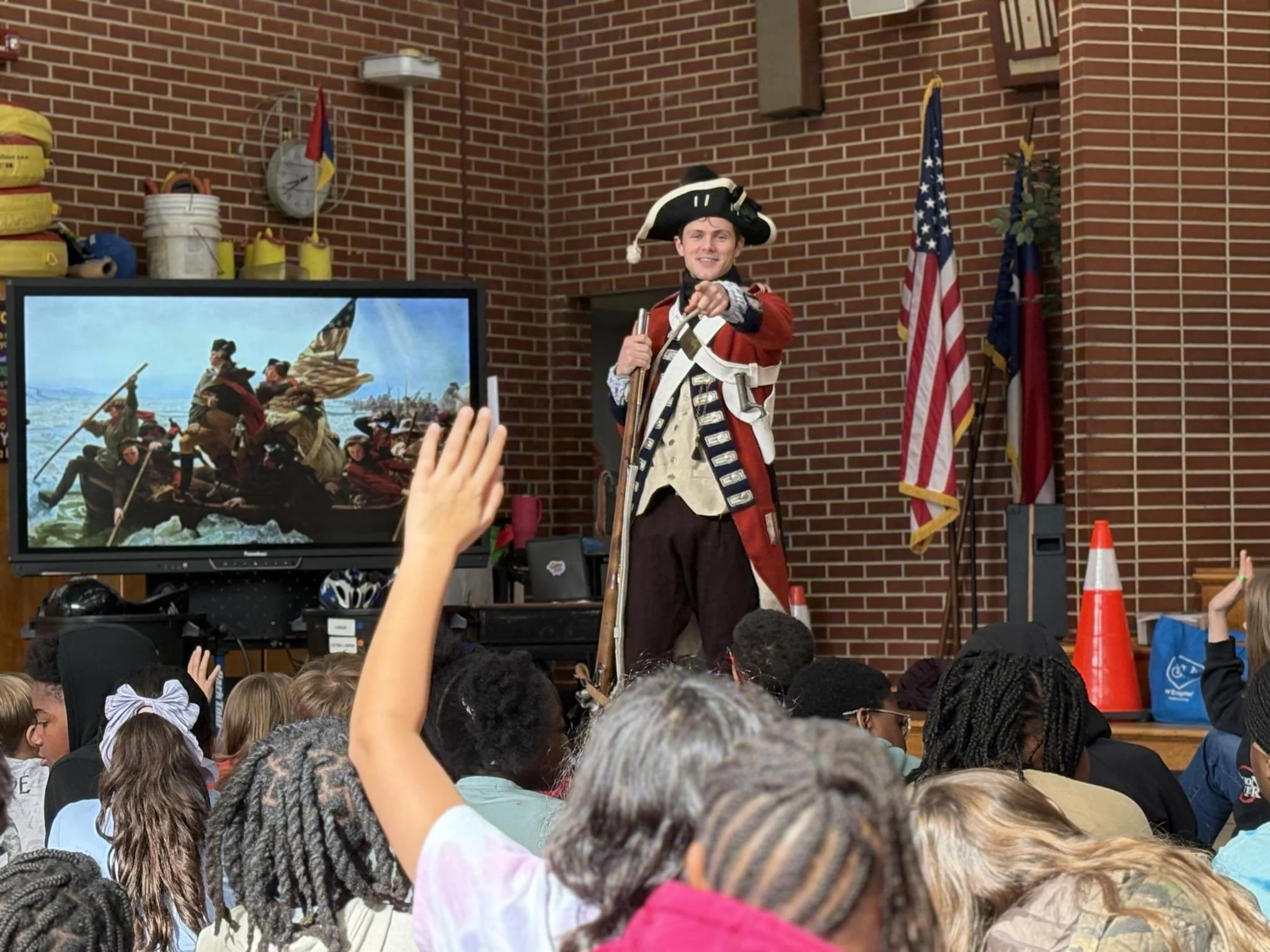
For many people in rural North Carolina, civics has always felt like something that happens somewhere else. It lives in textbooks, in national elections, and in arguments on television. It rarely shows up in a way that connects to daily life.
Most civic education starts at the top. Students learn about the Constitution, Congress, and the presidency. These are important subjects, but they are also far removed from how decisions are made in small towns and rural counties. When civics feels distant, it becomes easy to treat it as theoretical or optional.
That distance is especially pronounced for young people. A student might graduate knowing how a bill becomes a law, yet have no idea who sets the school calendar, who oversees local elections, or why a county commission meeting can shape their future more than a national race.
The Hometown Holler Foundation takes a different approach.
We start civic education where rural life actually happens. That means teaching civics through counties, districts, and communities people recognize. It means showing students how local decisions affect schools, roads, land use, and public services they interact with every day.
When civics is grounded in place, it stops feeling abstract. A legislative district is no longer just a shape on a map. It becomes something tied to a classroom, a bus route, or a familiar building. Authority becomes easier to understand when it is connected to real people and real institutions.
This kind of education does not tell students what to believe. It gives them tools. Understanding who represents them, how officials are selected, and what powers those officials hold allows young people to make sense of the system on their own terms.
In rural communities, that clarity matters. Many students grow up surrounded by civic institutions without ever being taught how they work together. When education fills that gap, participation feels possible rather than performative.
Civic education does not need to be louder or more ideological to be effective. It needs to be closer to home. By starting with the realities of rural life, the Hometown Holler Foundation helps students see civics not as something imposed from above, but as a system they already inhabit.